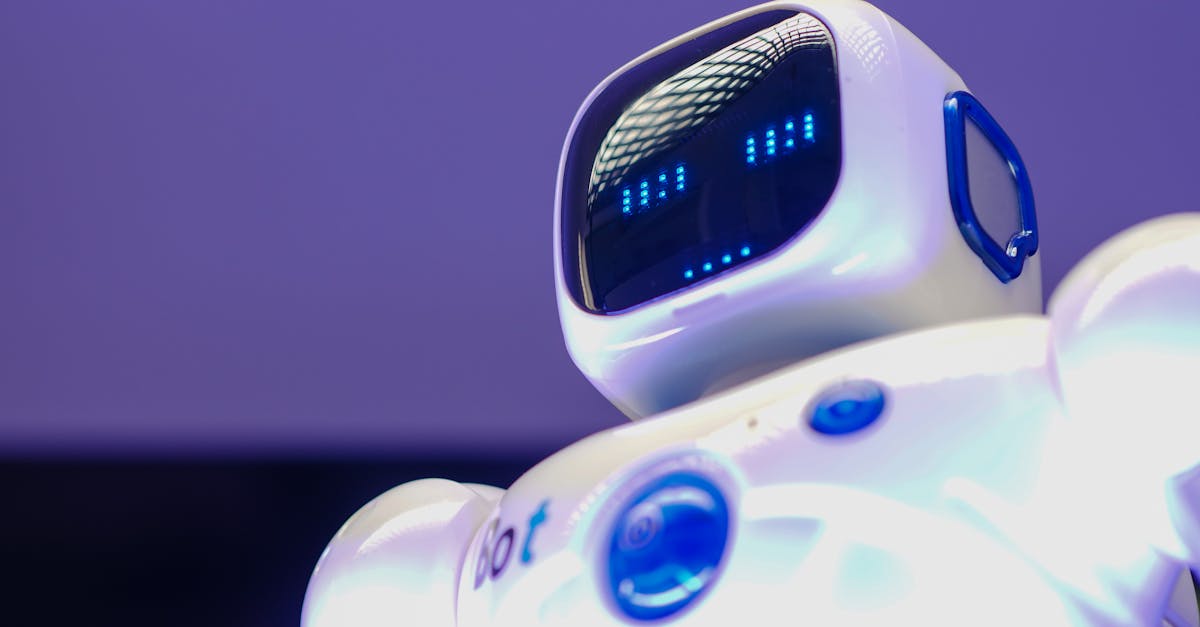
AI as an extension of cognition rather than a replacement?

A viral Reddit thread on r/Artificial is reigniting serious debate about whether AI replaces human thinking or actually extends it, drawing on research from psychologists, neuroscientists, and tech industry analysts. The distinction matters enormously, because how we answer that ...
A post circulating on Reddit's r/Artificial community has touched a nerve across both developer circles and general audiences, arguing that artificial intelligence is not on a collision course with human cognition but is instead becoming a natural extension of it. According to the discussion thread, the framing is straightforward: physical tools amplified human labor without making human workers obsolete, and AI might be doing the same thing for thinking itself, enhancing decision-making, creativity, and problem-solving rather than simply replacing them. The post has since drawn hundreds of responses and spawned a broader conversation that pulls in research, product design philosophy, and genuine fear about what happens to the human mind when machines start doing the thinking.
Why This Matters
This is not a niche philosophical argument. It is the central question that will determine how AI companies position their products, how regulators approach deployment, and whether the next generation of workers enters the labor market better equipped or intellectually hollowed out. A March 2026 article in ScienceAlert, citing the Stanford AI Index Report 2025, documented the explosion in AI consumer products capable of drafting emails, summarizing documents, and generating creative content in seconds, meaning the cognitive offloading this debate describes is already happening at scale. If the augmentation thesis is wrong and replacement is the actual outcome, the erosion of critical thinking skills across hundreds of millions of users is not a future risk but a present one.
Daily briefing from 50+ sources. Free, 5-minute read.
The Full Story
The Reddit argument rests on a historical analogy that is genuinely compelling. The industrial revolution introduced power tools, assembly lines, and mechanized agriculture, and while specific jobs were eliminated, human workers did not become obsolete. Instead, the nature of physical labor shifted. The Reddit post asks whether the same logic applies to cognitive labor, with tools like ChatGPT, Claude, and Gemini functioning as mental amplifiers rather than substitutes.
Dr. Ryan C. Warner, writing for Psychology Today in March 2026 in a piece reviewed by Davia Sills, drew a sharp line between two very different ways people interact with AI systems. In one pattern, users treat AI as a crutch, accepting outputs without critical evaluation and gradually surrendering ownership of their decisions. In the other, users employ AI strategically to sharpen their analysis and push their creative thinking further than they could go alone. Warner argues the outcome is not predetermined by the technology itself but by how each person chooses to engage with . The concern that the second pattern is losing to the first is real and backed by data. Misia Temler, writing for ScienceAlert on March 15, 2026, reported expert warnings that over-reliance on AI tools is already showing measurable effects on how people think, perceive, and remember information. The research cited suggests that cognitive environments shaped by AI exploit existing tendencies toward mental shortcuts, making it easier to offload thinking and harder to resist doing so. The worry is that repeated offloading erodes the very capacities that make human judgment valuable in the first place.
A 2024 peer-reviewed study published in scientific literature and catalogued by the National Institutes of Health examined how generative AI affects cognitive effort and task performance, offering some of the first empirical data on this question. The findings are not a clean verdict for either side. They suggest that outcomes vary significantly depending on usage patterns, which supports the augmentation argument in principle while leaving open the real possibility of cognitive atrophy in users who lean heavily on AI outputs without engaging critically.
The tech industry has absorbed this debate and started responding to it, at least rhetorically. Microsoft built its entire "Copilot" branding strategy around the augmentation frame, positioning AI as a working partner across its product suite rather than an autonomous replacement for human roles. Enterprise software vendors have increasingly designed human-in-the-loop architectures, where AI recommendations are flagged for human review before being acted on. This design choice is a direct operationalization of the augmentation thesis, and it reflects real demand from organizations that want efficiency gains without surrendering control. You can explore how these AI tools are structured across different enterprise categories to see the pattern clearly.
Key Details
- A March 2026 ScienceAlert article by Misia Temler cited the Stanford AI Index Report 2025 on the proliferation of AI consumer products capable of automating routine cognitive tasks.
- Dr. Ryan C. Warner published guidance in Psychology Today in March 2026 distinguishing between AI as cognitive crutch versus AI as augmentation tool.
- A 2024 study on generative AI and cognitive effort, indexed by the National Institutes of Health, provided early empirical data on how AI integration affects task performance.
- Microsoft's Copilot branding, launched across multiple product lines, represents one of the largest commercial bets on augmentation framing over replacement framing.
- The Reddit thread on r/Artificial sparked a cross-disciplinary debate in 2025 that has since drawn responses from developers, researchers, and educators.
What's Next
Longitudinal research tracking cognitive outcomes in sustained AI users over 3 to 5 years will be the real test of the augmentation thesis, and several academic teams are now designing those studies. Regulatory bodies in the European Union and the United States are expected to weigh cognitive impact data as part of broader AI governance frameworks being finalized through 2026 and 2027. Organizations building AI agents for enterprise deployment will face growing pressure to demonstrate that their systems are designed to preserve human judgment rather than quietly eliminate .
How This Compares
Compare this conversation to the debate that surrounded calculators in classrooms during the 1980s. Educators worried that students who relied on calculators would lose the ability to do arithmetic, and some of that concern proved justified in specific contexts. But the broader outcome was that students redirected cognitive energy toward higher-order mathematical reasoning. AI is orders of magnitude more capable than a calculator, which means both the upside of the augmentation scenario and the downside of the replacement scenario are proportionally larger.
Microsoft's Copilot strategy is the most visible corporate expression of the augmentation argument, but it exists in tension with the company's own development roadmap. Microsoft and competitors including Google and OpenAI are simultaneously building increasingly autonomous AI agents designed to act with minimal human oversight. That gap between the augmentation pitch and the autonomous-agent product pipeline is where the honest analysis lives. Companies are selling augmentation while building replacement capabilities, and the market will determine which one wins.
The Psychology Today framework from Dr. Warner and the ScienceAlert research from Temler together paint a picture that should concern anyone building AI products without deliberate cognitive design principles. The research community is not aligned on whether AI is net-positive or net-negative for human cognition, and the 2024 NIH-indexed study is an early data point in what will become a much larger body of evidence. Developers who want to get ahead of this should read the available guides on responsible AI design before the regulatory literature catches .
FAQ
Q: Does using AI tools make you less intelligent over time? A: The current evidence is preliminary but worth taking seriously. Research cited in a March 2026 ScienceAlert report suggests that heavy reliance on AI for routine cognitive tasks can affect how people think, attend, and remember. The key variable appears to be how you use the tools. Critical engagement with AI outputs seems to preserve cognitive sharpness, while passive acceptance may erode . Q: What does "AI as cognitive augmentation" actually mean in practice? A: It means using AI to extend what you can think through rather than to avoid thinking altogether. A writer using AI to stress-test an argument or generate alternative framings is augmenting. A writer who accepts the first AI draft without evaluation is offloading. Dr. Ryan C. Warner's March 2026 Psychology Today piece draws exactly this distinction and offers practical guidance on staying in the first category.
Q: Are AI companies actually designing for augmentation or just claiming to? A: Both, depending on the product. Enterprise tools with human-in-the-loop architectures are genuinely designed to keep humans in the decision chain. Consumer products optimized for speed and convenience often default to replacement behavior by making it easier to accept AI outputs than to interrogate them. Microsoft's Copilot branding leans heavily on augmentation language, but the company is also developing autonomous agents that operate with minimal human oversight.
The augmentation versus replacement debate is not going to be settled by a Reddit thread or a single research paper, but the fact that it has broken into mainstream conversation in 2025 and 2026 signals that the public is starting to ask the right questions. How AI companies, educators, and policymakers answer those questions in the next two to three years will define the cognitive relationship between humans and machines for a generation. Subscribe to the AI Agents Daily weekly newsletter for daily updates on AI agents, tools, and automation.
Get stories like this daily
Free briefing. Curated from 50+ sources. 5-minute read every morning.