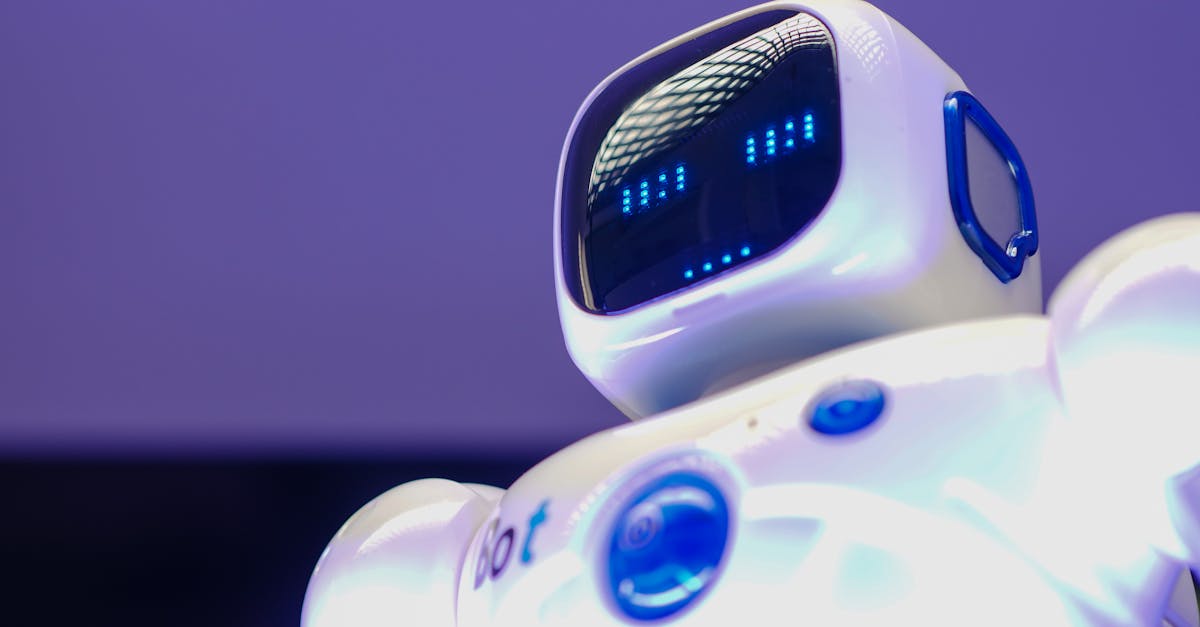
The best AR and MR glasses in 2026: Expert tested and reviewed

ZDNet has published its expert roundup of the best augmented reality and mixed reality glasses available in 2026, covering hardware from companies including VITURE, Samsung, Apple, and Meta. The report marks a genuine turning point for a category that spent years failing to earn ...
According to ZDNet's latest coverage, the augmented reality and mixed reality glasses market has reached what reviewers are calling a mature phase in early 2026, with multiple consumer-ready devices now passing real-world testing. The publication put current AR and MR hardware through extensive evaluation across criteria including display quality, battery life, field of view, weight distribution, and AI feature integration, producing a ranked guide for buyers navigating one of the most technically complex product categories in consumer electronics.
Why This Matters
This roundup matters because AR glasses have been a punchline in tech circles since Google Glass burned $1,500 of goodwill in 2013, and the fact that credible reviewers are now publishing "best of" lists without irony signals genuine market maturity. The enterprise sector is already moving, with manufacturing, healthcare, and field service companies deploying these devices at scale, which historically precedes consumer adoption by two to three years. VITURE's Luma XR is being positioned as a technical leader, which is notable because it means a challenger brand, not Apple or Samsung, is currently setting the benchmark. When Apple enters this space with its known product polish and ecosystem lock-in, the competitive pressure will reshape pricing across the entire category within months.
Daily briefing from 50+ sources. Free, 5-minute read.
The Full Story
For most of the past decade, smart glasses lived in a strange purgatory, technically interesting but practically useless. Google Glass, which launched in 2013 at more than $1,500 per unit, generated enormous press coverage and almost no sustained adoption. Users complained about battery life, privacy-conscious strangers complained about the cameras, and the device never found a problem it was uniquely suited to solve. Snap Spectacles, which arrived in 2016 as a more casual alternative focused on social media, ran into a similar wall. It was entertaining for about two weeks and then sat in a drawer.
The 2026 generation is a fundamentally different product category. According to ZDNet's testing conducted in February 2026, current AR and MR glasses now incorporate on-device AI processors capable of handling natural language processing, real-time object recognition, and simultaneous language translation without requiring a constant cloud connection. That last capability, real-time translation, has reportedly generated strong enthusiasm from reviewers covering international business and travel use cases. The technical requirement alone is impressive: the device must capture audio, run speech recognition, process a translation model, and deliver audio output, all in a form factor strapped to your face and powered by a battery.
VITURE has emerged as an early leader with its Luma XR glasses, which reviewers have identified as one of the most technically capable consumer AR products currently on the market. VITURE's positioning is significant because it demonstrates that the 2026 generation of winners is not automatically the biggest brand in the room. Samsung and Apple have both signaled upcoming AR releases, and Meta continues to invest in spatial computing following its years of virtual reality infrastructure building, but none of those products have shipped yet in this form factor. VITURE is setting the performance standard while the giants are still preparing.
Expert evaluations in 2026 now include data privacy analysis as a standard review criterion, which reflects how seriously the industry has internalized the backlash that killed Google Glass. These devices carry cameras, microphones, and AI processing capabilities and are worn throughout users' daily lives, which creates a meaningful data collection surface. Reviewers at both ZDNet and Cybernews have flagged that buyers should examine each manufacturer's privacy policies before purchasing, treating that review the same way they would evaluate battery life or display resolution.
Enterprise adoption is outpacing consumer uptake right now, and that dynamic is telling. Manufacturing facilities are deploying AR glasses for step-by-step task guidance. Healthcare providers are using them for remote expert consultation during procedures. Field service companies are equipping technicians with real-time overlay data. This is the same adoption curve that smartphones followed in the mid-2000s, when corporate email and calendar integration justified the hardware cost long before the App Store existed.
Key Details
- Google Glass launched in 2013 at a price exceeding $1,500 and failed to achieve mainstream adoption.
- Snap Spectacles arrived in 2016 and similarly missed mainstream market penetration due to single-purpose social media focus.
- ZDNet's expert review process as of February 2026 evaluates AR glasses across at least six dimensions: processing power, display quality, battery life, field of view, weight, and ecosystem integration.
- VITURE's Luma XR is identified as a leading consumer AR product in the current generation.
- Samsung, Apple, and Meta have all announced plans for new AR-related product releases in 2026 and beyond.
- Enterprise sectors including manufacturing, healthcare, and field service are actively deploying current-generation AR glasses.
- Real-time translation requires four simultaneous AI processes: audio capture, speech recognition, translation modeling, and audio output generation.
What's Next
Samsung's display manufacturing expertise and Galaxy ecosystem give it structural advantages once its 2026 AR hardware ships, and Apple's entry will almost certainly compress margins across the category as it has done in wireless earbuds and smartwatches. Buyers who want leading-edge hardware right now have real options from VITURE and others, but anyone who can wait six to twelve months will likely find a broader and more competitive market. Watch for Apple's AR announcement to function as the product category's mainstream validation moment, the equivalent of what the original iPhone did for touchscreen smartphones in 2007.
How This Compares
The broader context for this ZDNet roundup is a wave of AI hardware coverage happening across major tech publications in early 2026, all pointing toward the same conclusion: AI-integrated wearables have crossed a usability threshold. Compare the current AR glasses market to the AI PC push from 2024, where Intel, AMD, and Qualcomm all shipped chips with dedicated neural processing units and reviewers struggled to find software that actually used them. AR glasses face the opposite problem in 2026. The software use cases, translation, object recognition, voice assistance, are already mature. The hardware caught up to the applications rather than the other way around.
Meta's position here is worth watching carefully. The company spent billions building a VR-first ecosystem through Quest headsets, and that infrastructure gives it a developer base and spatial computing expertise that pure AR newcomers lack. But Meta's brand associations skew heavily toward gaming and social media, which may limit its appeal in enterprise deployments where companies are currently making bulk purchasing decisions. VITURE and other challengers are capturing enterprise contracts right now, and those relationships create switching costs that will be difficult for even Meta to overcome later.
Apple's impending entry is the wildcard that everyone in this industry is quietly pricing into their roadmaps. The company's wearable track record with Apple Watch (launched 2015) and AirPods (launched 2016) shows a consistent pattern: enter a market late, ship a more refined product than the incumbents, and use ecosystem integration to create retention. For developers building AI tools and platforms on top of AR hardware, Apple's entry will likely be the moment the addressable market expands dramatically.
FAQ
Q: What is the difference between AR glasses and MR glasses? A: Augmented reality (AR) glasses layer digital information, like navigation arrows or translated text, on top of your normal view of the physical world. Mixed reality (MR) glasses go further by blending digital objects and physical environments more completely, allowing virtual items to interact with real surfaces. In practical terms, most 2026 consumer devices support both modes, with the distinction mattering more to developers than end users.
Q: Are AR glasses safe to wear all day? A: Current-generation AR glasses have improved substantially in comfort and weight distribution, and ZDNet's February 2026 reviews specifically test extended wearing periods as part of their evaluation criteria. Battery life remains a limiting factor for full-day use across most models, meaning most users will need to charge mid-day. Heat and ventilation have also improved since earlier generations, but individual comfort will vary depending on the device and the user's prescription needs.
Q: Do AR glasses work without an internet connection? A: Most 2026 AR glasses can handle core AI tasks including voice commands, basic translation, and object recognition directly on the device without requiring a constant internet connection, using dedicated on-device AI processors. Cloud connectivity remains available for enhanced functionality and more complex processing tasks. Check individual guides and product reviews for specific offline capability details on the model you are considering, as manufacturers vary in how much they prioritize on-device versus cloud processing.
The AR and MR glasses category has spent more than a decade earning the right to be taken seriously, and the 2026 hardware generation finally makes the case. With enterprise adoption already underway and Apple, Samsung, and Meta all preparing to enter or expand in this market, the next twelve months will define which platforms own this space for the following decade. Subscribe to the AI Agents Daily weekly newsletter for daily updates on AI agents, tools, and automation.
Get stories like this daily
Free briefing. Curated from 50+ sources. 5-minute read every morning.