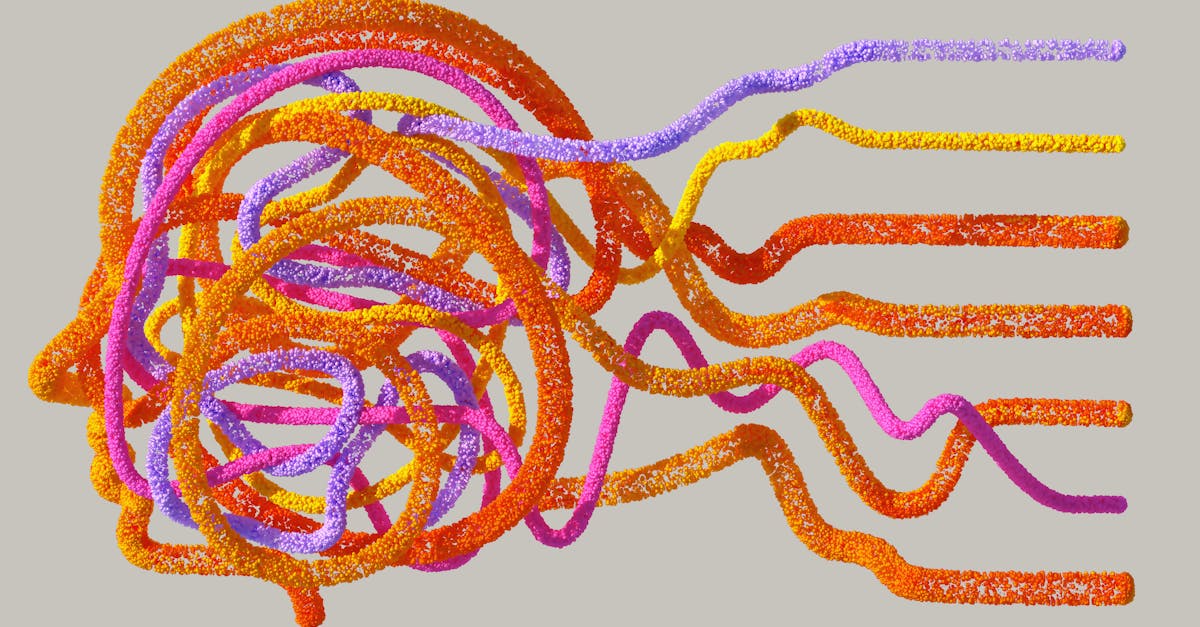
How an LLM becomes more coherent as we train it

Giles Thomas published a detailed look at how large language models grow more coherent as training progresses, tracing the specific mechanisms behind that improvement. This matters because understanding the "why" behind coherence development gives researchers and engineers a real...
Giles Thomas, writing for his personal technical blog at gilesthomas.com in April 2026, digs into one of the most deceptively simple questions in AI research: how exactly does a language model go from generating word salad to producing text that actually makes sense? The piece surfaced on Hacker News under item ID 47811377 and, at the time of writing, had gathered 2 points and zero comments, which likely reflects early indexing rather than low quality. Thomas is a developer and writer who has a track record of turning dense machine learning concepts into accessible technical writing.
Why This Matters
Most coverage of LLM training focuses on scale, the number of parameters, the size of the dataset, the teraflops of compute consumed. Thomas is asking a different question, and it is the right one. If you understand the mechanism, you can target it. MIT researchers published findings in February 2026 showing that smarter training procedures can cut costs substantially, and that kind of work depends entirely on knowing which parts of training produce which capabilities. Coherence is not a soft, fuzzy quality, it is the difference between a model that can actually assist a developer building AI tools and one that generates impressive-sounding nonsense.
Daily briefing from 50+ sources. Free, 5-minute read.
The Full Story
Thomas's core argument is that coherence does not switch on at some threshold of training. It grows, gradually and unevenly, as the model's internal representations become more structured. Early in training, a model is essentially pattern-matching at the surface level, learning that certain words cluster near other words. That produces fluency in the narrow sense, the sentences are grammatical, but the output does not hold together across multiple sentences.
The mechanism Thomas traces starts with the model learning statistical regularities in text. High-quality training data is full of coherent prose, and the model absorbs the statistical fingerprints of what coherent prose looks like. Which topics tend to stay stable across a paragraph. Which transitions are natural. Which follow-up sentences are probable given a specific opening. This is not yet understanding, but it is the foundation that supports coherent output.
Transformer-based models, which cover essentially every major LLM in commercial use today, rely on attention mechanisms to track relevant context across a sequence. Thomas explains that as training progresses, those attention patterns sharpen. Early in training, a model's attention heads are somewhat diffuse, attending to nearby tokens without strong selectivity. As gradient updates accumulate, the attention patterns grow more precise, locking onto contextually relevant information across longer spans of text. That is a direct mechanical explanation for why coherence improves over time rather than appearing all at once.
There is also a layering effect at work. Transformer architectures stack multiple layers, and Thomas points out that the lower layers tend to capture surface-level syntactic patterns while deeper layers encode more abstract semantic relationships. Coherence across a paragraph requires planning at an abstract level and then executing that plan through word-by-word choices. The hierarchical structure of transformers is well-suited for this, but only once training has had enough time to populate those deeper layers with meaningful representations.
The practical upshot is that measuring coherence improvement during training is genuinely hard. Perplexity, the standard metric, tracks average prediction accuracy per token. A model can have low perplexity and still produce incoherent long-form text, because perplexity is local and coherence is global. Thomas's framing implies that researchers who rely only on perplexity curves are missing a significant part of the story of how their models are actually developing. Better evaluation means watching for semantic consistency, co-reference resolution accuracy, and logical flow, not just next-token loss.
Key Details
- Giles Thomas published the article in April 2026 at gilesthomas.com.
- The piece received 2 upvotes on Hacker News under item ID 47811377 at the time of indexing.
- Three primary mechanisms drive coherence growth: statistical pattern absorption from training data, sharpening of attention patterns across transformer layers, and development of hierarchical semantic representations.
- Perplexity, the most common training metric, is identified as insufficient for capturing coherence improvement.
- MIT researchers, in a February 2026 publication, demonstrated that training methodology directly affects how efficiently capability development occurs.
- A University of Delaware study from February 2026, authored by Qile Wang and seven co-authors and published as arXiv:2602.19690v1, confirmed that LLM coherence has measurable real-world impact in human-AI collaborative annotation tasks.
What's Next
The immediate implication for anyone training or fine-tuning models is to add coherence-specific evaluations alongside perplexity tracking, because the two are measuring different things. As MIT's February 2026 efficiency research gets adopted more widely, teams that combine smarter training procedures with coherence-aware evaluation will have a genuine edge in producing useful models with less compute. Expect more published work in late 2026 focused on developing standardized coherence benchmarks, since the field clearly recognizes the measurement gap that Thomas's piece highlights.
How This Compares
The LessWrong post "Taking LLMs Seriously (As Language Models)" provides theoretical grounding that complements Thomas's more mechanistic account. The LessWrong framework introduces properties like conditioning, transitivity, entropy preservation, and paraphrase invariance as fundamental to coherent model behavior. Thomas's work can be read as the practical training-dynamics story that explains how models come to satisfy those theoretical properties in the first place. Neither piece is complete without the other, and together they form a more complete picture than most popular AI coverage provides.
Compare this to the University of Delaware's February 2026 empirical study, which came at the coherence question from a completely different angle, measuring whether real human annotators found LLM explanations sensible enough to influence their decisions on news classification tasks. Where Thomas explains the mechanism, Wang and colleagues measured the outcome. The fact that human judges could meaningfully evaluate coherence in that study confirms that coherence is not just a theoretical concern, it is a practical one with direct consequences for how useful a model actually is in AI-assisted workflows.
MIT's concurrent work on training efficiency adds a third dimension. If you can train a model to the same capability level in less time or with less energy, the economic and environmental math changes significantly. Thomas's coherence framing fits naturally into that conversation: efficiency gains are most valuable if you know what you are trying to optimize for, and coherence is a cleaner target than raw loss curves. These three research threads, mechanistic, empirical, and efficiency-focused, are converging on the same question from different directions, which is usually a sign that the field is about to produce something concrete. Follow the AI Agents Daily news section for updates as this research matures.
FAQ
Q: What does coherence mean when we talk about AI language models? A: Coherence means the model's output holds together logically and thematically across multiple sentences, not just at the word-by-word level. A model can be grammatically fluent but still incoherent if it contradicts itself mid-paragraph or loses track of what it was discussing. Coherence is what makes longer AI-generated text actually useful rather than superficially convincing.
Q: Why does a language model get more coherent the longer you train it? A: Three main things happen during training. The model absorbs statistical patterns of how coherent human prose is structured. Its attention mechanisms sharpen and learn to track relevant context across longer spans of text. And its deeper layers develop more abstract representations that allow something resembling planning before generating each sentence.
Q: How do researchers measure whether an LLM is becoming more coherent? A: This is an open problem. Standard metrics like perplexity measure next-token prediction accuracy, which is local and does not capture long-range coherence. Better approaches include measuring semantic consistency between sentences, evaluating co-reference resolution, and using human judges to assess whether explanations make sense, as the University of Delaware's 2026 study did.
The research Giles Thomas has pulled together points to a maturing understanding of what actually happens inside a model as it trains, and that understanding is going to be essential as the field moves toward building agents that can sustain coherent multi-step reasoning over long tasks. This is foundational work that deserves more attention than its early Hacker News traction suggests. Subscribe to the AI Agents Daily weekly newsletter for daily updates on AI agents, tools, and automation.
Get stories like this daily
Free briefing. Curated from 50+ sources. 5-minute read every morning.