
Gazing Into Sam Altman's Orb Now Proves You're Human on Tinder
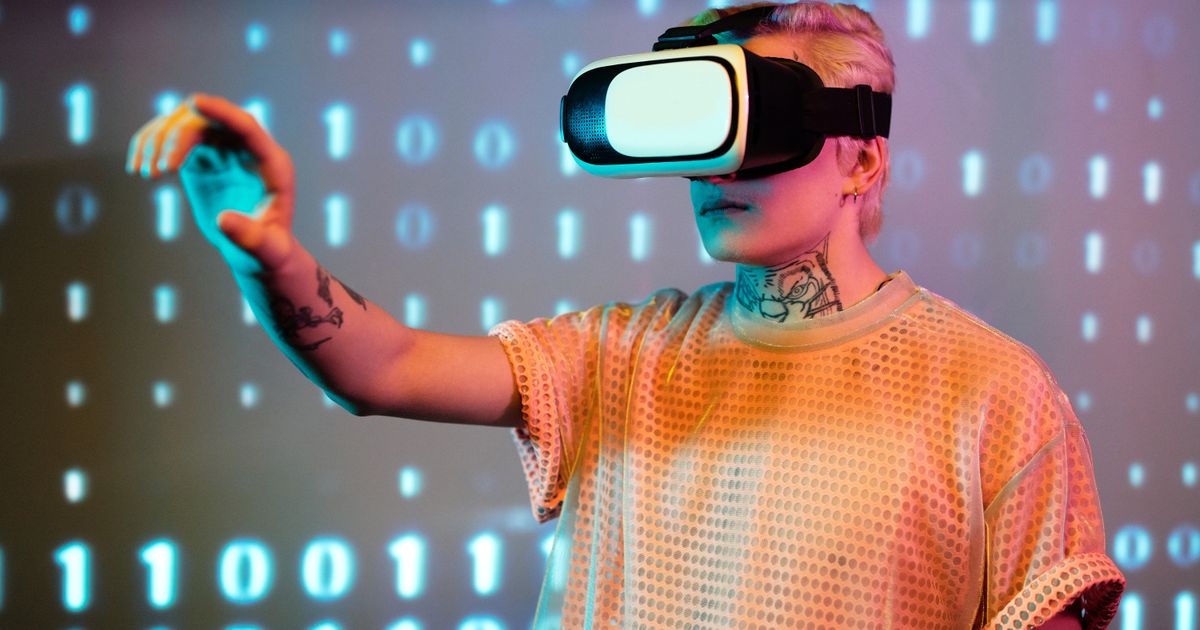
Sam Altman's World project announced on April 17, 2026, that Tinder users worldwide can now display a verified human badge on their dating profiles after scanning their irises at one of World's physical Orb devices. This is the biggest consumer test yet for a technology built to ...
Wired AI broke this story, reporting directly from World's Lift Off event in San Francisco. The piece covers the global Tinder expansion alongside a slate of new enterprise partnerships that signal Tools for Humanity, the company behind World, is aggressively pushing iris-based identity verification into mainstream consumer life. A pilot program in Japan preceded the global rollout, giving World and Tinder data to justify the larger bet.
Why This Matters
World has 18 million verified users right now, up from 12 million last year, and this Tinder partnership could dramatically accelerate that number by putting biometric verification in front of people who simply want to date, not those already invested in blockchain or crypto. Fake profiles and bot accounts have cost dating platforms real user trust for over a decade, and a hard biometric badge is a fundamentally stronger signal than a phone number check. If this works at Tinder's scale, every major social platform will face pressure to offer something similar. The window for softer verification methods may be closing fast.
Daily briefing from 50+ sources. Free, 5-minute read.
The Full Story
Sam Altman co-founded World back in 2019 with Alex Blania, years before generative AI made the "are you a real person?" question feel genuinely urgent. The premise was simple and somewhat dystopian: AI agents would eventually flood the internet, and humans would need a reliable way to prove their humanity. The Orb, a glossy white sphere that scans your iris and generates a cryptographic identifier, is World's answer to that problem. At the time, the idea seemed speculative. In 2026, with AI agents being pushed into everyday software by companies like OpenAI and Anthropic, it feels like infrastructure.
The Lift Off event in San Francisco on April 17 was World's moment to show it can move beyond its early adopter base. The headline partnership is with Tinder, owned by Match Group, which will let users who have already scanned their irises at an Orb display a verified human badge on their dating profile. As an incentive, verified users receive five free "boosts," which normally cost money and increase profile visibility by up to 10 times for 30 minutes. That is a real financial inducement, not just a cosmetic badge.
Tiago Sada, Tools for Humanity's chief product officer, told Wired that social media companies are a priority target for future partnerships. He pointed specifically to Reddit, which has already started testing World's verification as a way to help users identify bots in comment threads. The appetite from platforms is clearly growing, and World is positioning itself as the infrastructure layer those platforms plug into.
Beyond Tinder, the announcements from the Lift Off event covered meaningful enterprise ground. Zoom confirmed that meeting hosts can now require participants to verify their identity through World before joining a call, which has obvious implications for sensitive business and legal meetings. Docusign, the contract signing platform, will allow users to require World identity verification before a document can be signed. Both integrations treat World not as a nice-to-have badge but as a gating mechanism for consequential actions.
World also introduced a product called Concert Kit, aimed directly at the ticket scalping problem that has made buying tickets for major shows a genuine ordeal. The feature lets artists reserve tickets for verified humans only, cutting bots out of the purchase queue. The first public test will be a verified-humans-only show by Bruno Mars collaborator Anderson .Paak, performing under his DJ Pee .Wee alias in San Francisco on April 17. That test, on the same day as the announcement, is a bold proof of concept for a feature that could appeal to artists and venues across the industry.
For all the momentum, World's path has not been smooth. The company has faced regulatory scrutiny in multiple countries over data protection concerns, and those challenges have not fully resolved. Iris data is biometric at its most sensitive, a biological identifier that cannot be reset if it is ever compromised. The company claims that its system does not store raw iris images, but critics remain skeptical, and governments across Europe and Asia have probed the company's compliance with local privacy laws.
Key Details
- World announced the global Tinder expansion on April 17, 2026, at its Lift Off event in San Francisco.
- World was founded in 2019 by Sam Altman and Alex Blania.
- The company now has 18 million iris-verified users, up from 12 million the previous year.
- Tinder users who verify receive 5 free boosts, each increasing profile visibility by up to 10 times for 30 minutes.
- Zoom and Docusign both announced World integrations at the same event.
- Concert Kit will debut with an Anderson .Paak DJ set in San Francisco on April 17, 2026.
- The Tinder integration was preceded by a pilot program in Japan.
What's Next
Tiago Sada's stated focus on social media partnerships means platforms like Instagram, X, and TikTok are likely in active conversations with Tools for Humanity, even if nothing is announced yet. Watch for World's Orb network to expand aggressively in cities where Tinder usage is highest, since the physical scan requirement is the single biggest friction point stopping mainstream adoption. Reddit's ongoing test of World verification is the next near-term milestone to monitor, as its outcome will tell the industry a lot about whether users on a text-first platform will tolerate biometric gating for basic community participation.
How This Compares
The closest parallel to what World is doing is what X, formerly Twitter, attempted with its paid verification program, which launched in late 2022. That program let anyone pay $8 a month for a blue checkmark, a system designed partly to reduce fake accounts. It largely failed on that front because a payment is trivially fakeable at scale, and the checkmark became a punchline rather than a trust signal. World's iris scan is categorically different because it is biologically bound to a unique person. You cannot buy 10,000 iris scans the way you can buy 10,000 subscriptions.
Compare this also to the phone-number verification systems that WhatsApp and Telegram rely on. Those work reasonably well for tying accounts to devices, but a phone number can be spoofed, purchased, or reassigned. An iris cannot. In that sense, World is not competing with other verification badges so much as it is proposing an entirely different tier of identity assurance, one that sits above anything currently deployed at consumer scale.
Zoom's parallel adoption of World verification for meetings is worth flagging specifically. Microsoft Teams and Google Meet have not announced comparable integrations. If Zoom's rollout goes smoothly, that gap becomes a competitive liability for its rivals in the enterprise video market. The enterprise and consumer tracks are converging here, and the AI tools and platforms space is watching closely to see which companies move first.
FAQ
Q: What is the World Orb and how does it work? A: The Orb is a physical biometric device built by Tools for Humanity that scans a person's iris to create a cryptographic proof of their unique humanity. Users visit an Orb location, allow the device to scan their eyes, and receive a World ID that can be linked to apps like Tinder. The company says it does not store the raw iris image after verification is complete.
Q: Do I have to pay to get verified on Tinder through World? A: The iris scan itself is free, and verified Tinder users actually receive 5 free boosts as an incentive, a feature that normally costs money and increases how many people see your profile. The main cost is time, since you need to physically visit an Orb location to complete the scan.
Q: Is my iris data safe if I use World? A: World claims it does not retain raw iris images after generating your cryptographic identifier, but the company has faced government investigations in multiple countries over suspected data protection violations. Privacy advocates point out that iris biometric data is irreplaceable, unlike a password, so users should weigh that risk before scanning.
The integration of hard biometric verification into apps like Tinder, Zoom, and Docusign marks a genuine shift in how the industry thinks about identity online, and World's 18 million verified users are just the beginning of what could become a much larger network effect. The Concert Kit test with Anderson .Paak on April 17 and Reddit's ongoing pilot will provide real-world data on whether consumers accept iris scanning as a fair trade for a better online experience. Subscribe to the AI Agents Daily weekly newsletter for daily updates on AI agents, tools, and automation.
Get stories like this daily
Free briefing. Curated from 50+ sources. 5-minute read every morning.


